Wellbeing Surveys Made Simple

Collect pupil, staff, and parent voice with national benchmarks, early-warning insights, and clear impact reporting.
For Schools, MATs, and other organisations.

Designed to fit into your day

One simple, streamlined system that gives you clear insight in minutes.
1
Choose What You Want to Measure
Select from 65+ evidence-based surveys covering wellbeing, resilience, belonging, test anxiety, staff wellbeing, parent voice, Ofsted voice and more.
2
Launch Your Survey in Minutes
Share with pupils, staff, or parents using a simple link or QR code - no complex logins, no distribution admin, no printing, and no manual chasing.
3
See Instant Insight - No Spreadsheets Required
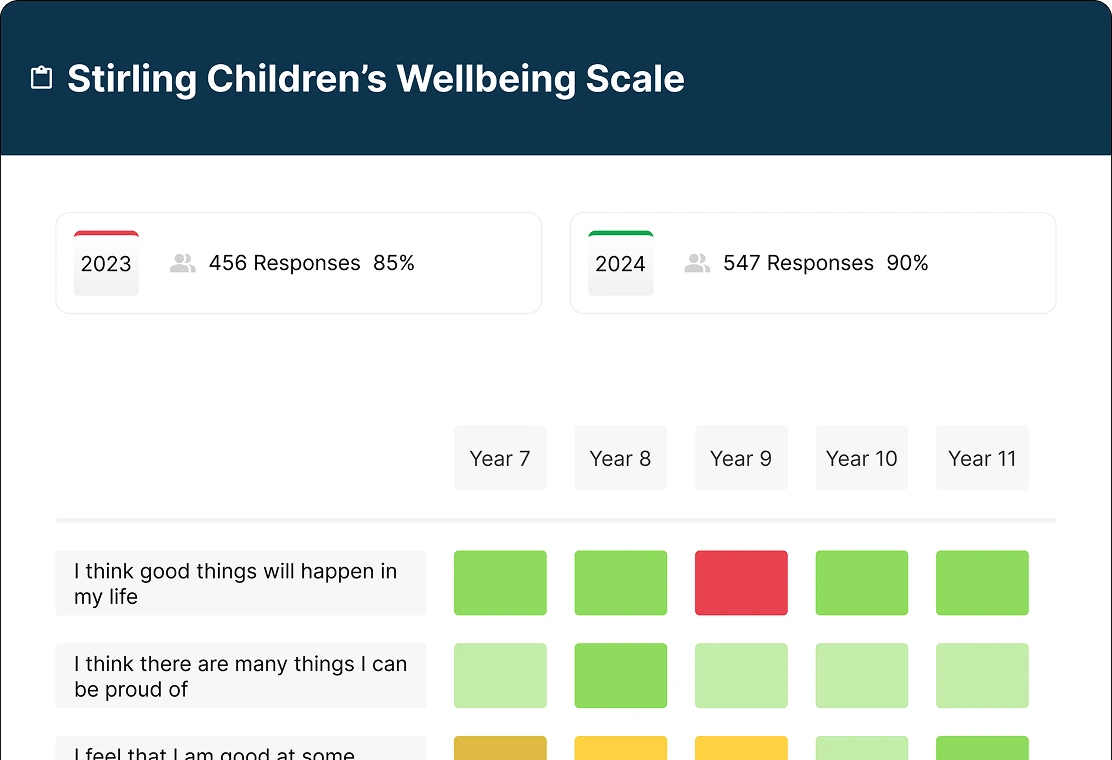
BounceTogether automatically turns responses into clear, visual reports the moment results come in - so you never have to collate data manually again.

Reporting Made Effortless

One click gives you everything you need - visual reports, heatmaps, trends, and national comparisons. No additional workload.

Data that makes a difference

The clarity, confidence, and evidence you need to support your pupils, staff, and wider school community. Built around Three I’s, our approach turns measurement into meaningful action.
Collect INSIGHT
check
Spot patterns and emerging trends early across individuals, groups and cohorts.
check
Use stakeholder voice to guide priorities and shape targeted improvement work.
check
See how your results compare nationally, giving every data point context.
Find Out More
Measure IMPACT
check
See whether interventions are improving wellbeing with clear before-and-after data.
check
Celebrate strengths and highlight areas of excellence across your school.
check
Build powerful, evidence-based narratives for governors, inspectors, and trust leaders.
Find Out More
IDENTIFY Struggling Pupils
check
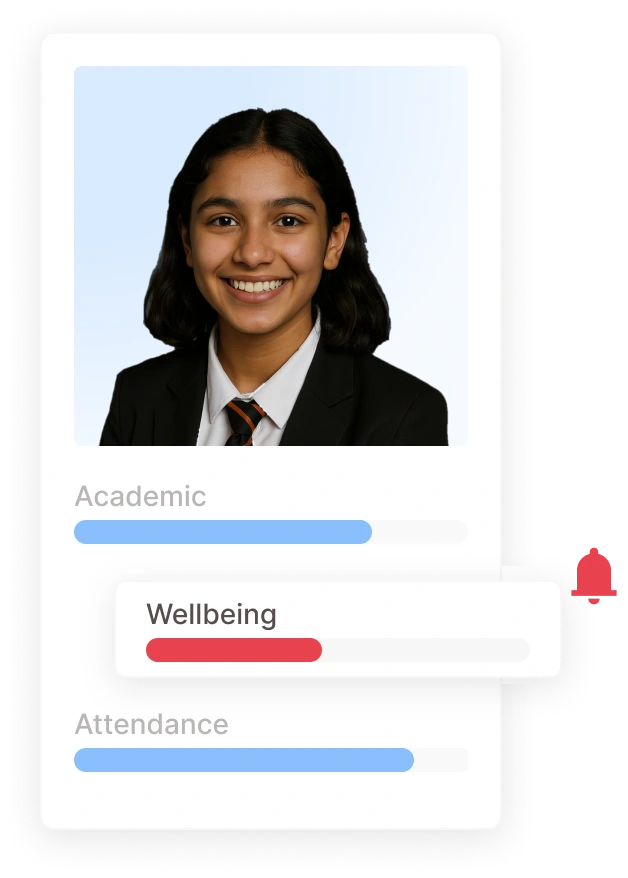
Highlight pupils who may be struggling using clear RAG-rated scoring.
check
See what pupils are really thinking and feeling, including issues like bullying/anxiety/belonging.
check
Address concerns before they become crises with early-warning insight.
Find Out More  

The UK’s Largest School Wellbeing Dataset at Your Fingertips

Understand what’s typical, identify what needs attention, and make decisions backed by millions of real responses.
12m
Answers
991
Schools supported
90k
Alerts raised
330k
Pupils supported

Add pupil voice into CPOMS safeguarding chronologies

Understand the story behind the behaviour by connecting pupil voice with safeguarding records to spot hidden concerns earlier.
An infographic conveying the concept of a notification raised from BounceAlerts going into CPOMS.
"We've genuinely reduced budgets from external providers by ensuring that we are being more specific about how our pastoral staff and learning mentors are working with pupils"
Anna Bateman
Senior Education Consultant
Trusted by 350+ schools

For Primary and Junior

This is some text inside of a div block.. This is some text inside of a div block.. This is some text inside of a div block. This is some text inside of a div block.
Learn more

Secondary and all-through

This is some text inside of a div block.. This is some text inside of a div block.. This is some text inside of a div block. This is some text inside of a div block.
Learn more

Any other organisation supporting schools

This is some text inside of a div block.. This is some text inside of a div block.. This is some text inside of a div block. This is some text inside of a div block.
Learn more
YOUR NEXT STEPS

Ensure no child's voice goes unheard

Move one step closer to implementing an efficient monitoring and tracking system that enables you to embed healthy wellbeing practices across your whole school and drive improvements.
A square of dots to accentuate an imageSurvey dashboard small

Frequently asked Questions

  • What is wellbeing?
    expand_more
    Wellbeing can be described as how people feel and how they function and how they evaluate their lives on the whole. How people feel refers to their emotions such or anxiety or sadness. How people function refers to things such as their sense of competence or their sense of being connected to those around them. How people evaluate their life as a whole is captured in their satisfaction with their lives, or how they rate their lives in comparison with the best possible life.
  • Can we trial BounceTogether? What does it cost?
    expand_more
    Yes! We offer a FREE trial so schools can explore how BounceTogether supports wellbeing and mental health through Insight, Impact, and Identification. The trial gives you access to our platform's core features including; wellbeing surveys, dashboards and reporting tools. It’s a great way to see how BounceTogether can help you monitor and improve pupil and staff wellbeing in a meaningful, evidence-based way.
    Sign up free
  • How do you measure wellbeing in school?
    expand_more
    You can measure wellbeing by assessing various aspects of pupils physical, mental, social, and emotional health. Surveys and questionnaires are a popular approach, where the results can help you assess wellbeing, happiness, feelings of safety, and satisfaction with school life. You can use this data effectively, alongside other data you have about your pupils to measure your progress and check what you're doing is having the right impact.
  • What is an example of a wellbeing survey?
    expand_more
    Surveys measure emotional health and wellbeing by asking questions about the lives, circumstances, environment and experiences of your respondents. They typically ask things like "On a scale of 1-10, how happy are you with your school envionment?", "Are you happy with your social relationships at school?", "Do your friends give you help if you need it?" and "On ascale of 1-10, how happy do you feel going to school?"  There are over 65 evidence-based surveys in our Resources section where you can download the questions to many of the most widely used surveys in schools.
  • How often should we run a wellbeing survey?
    expand_more
    It largely depends on the type of survey you are running. If you are tracking wellbeing over a longer period of time (e.g. using whole-school wellbeing surveys) then you might measure progress at a few intervals throughout the school year, usually around the same time, to ensure data over time is consistent.When you are measuring for impact evaluation, you are likely to collect data before and after making changes.
  • What survey should we use to measure wellbeing?
    expand_more
    You will want to choose something that best suits your organisation and your objectives or purpose for measuring. Here are 3 things you should consider:  1. Is the measure appropriate for the age range of my audience (e.g. the language it uses) You may want to use separate measures for separate ages. 2. Will the answers to the questions tell us what we are looking to find out? 3. How are we going to use the data to drive outcomes?
  • What is the best measure to use to measure wellbeing?
    expand_more
    You should choose an evidence-based measure that best suits your organisation and your objectives or purpose for measuring. Here are 3 things you should consider:  1. Is the measure appropriate for the age range of my audience (e.g. the language it uses) You may want to use separate measures for separate ages. 2. Will the answers to the questions tell us what we are looking to find out and will we be able to use the results positively? 3. How are we going to use the data to drive outcomes?